The original Rodrigo Diaz was a mercenary who fought for Christian and Muslim rulers, and for himself. This book tracks how, over the centuries, this figure becomes El Cid, the Christian and Spanish hero.
A hoard of over 321 mint-condition silver coins has been discovered near the construction site of Sizewell C, a future nuclear power station on England’s eastern coast.
How cultural connections, trade networks, as well as military and religious conflicts shaped the Baltic region during the Middle Ages. Theme: The medieval Baltic Alice Isabella Sullivan, "A Frontier and a Crossroads: Trade and Power in the Medieval Baltic," 16-19. Anti Selart, "Medieval Livonia: Connected and Contested," 20-23. Jeremy Solel, "Livonian Brothers of the Sword: Conquering in Christ's Name," 24-27. Jean Henri Chandler, "The Anglo-Hanseatic War: An Old Sea Bird and the Last Judgement," 28-35. Lehti Mairike Keelmann, "The Brotherhood of the Blackheads: Medieval Tallinn's Wealthy Merchants," 36-39. Features: Robert Jones, "Well protected? The strength of medieval armour," 8-9. Paul Aitchison, "Charles Martel: The progenitor of Europe," 10-15. Sean Manning, "Feeding Northumberland's House: A Late Medieval Household Budget," 40-41. James G. Clark, "The legend of Loreto: Mary's Humble, Holy House," 42-45. Ian Ross, "Kenilworth 1266: England's Greatest Siege," 46-49. Jonathan H. Jones, "Viking York: Life and Conflict in Medieval Jórvík," 50-53. Gabrielle Storey, "Theophanu: Empress, Ruler, and Rival," 54-55. Dan Spencer, "Book review: Gunpowder Technology in the Fifteenth Century: A Study, Edition and Translation of the Firework Book," 56. Tim Miller, "Book review: Shared Saints and Festivals Among Jews, Christians, and Muslims in the Medieval Mediterranean," 57.
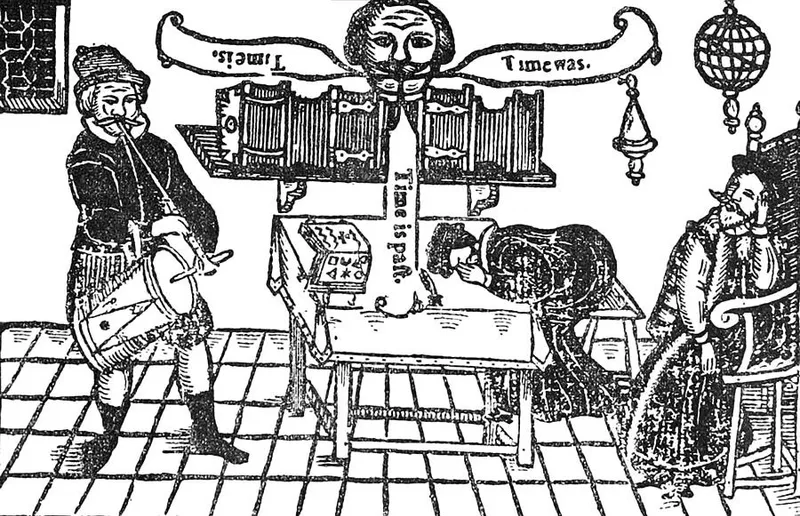
How the cathedral of Notre-Dame became a landmark in the history of architecture and the topography of Paris, then and now. Theme: Notre-Dame de Paris Kyle G. Sweeney (with textboxes by Dany Sandron), "Going Gothic: Notre-Dame de Paris," 20-29. Emily Davenport Guerry, "Crowning Paris: The royal procession of the Crown of Thorns in 1239," 28-33. Jennifer M. Feltman, "A portal through time: The Last Judgement at Notre-Dame de Paris," 34-36. Murray Dahm, "The gargoyles of Notre-Dame: Monsters to watch over us all," 37. Features: Galen Ford, "Chasing Chronos: Measuring time in the Middle Ages," 8-13. Conor Robison, "Ready to fight and die: The Battle of Antioch-on-the-Meander," 16-19. Robert Jones, "Knightly nostalgia: The legacy of medieval armour," 38-39. Susan Abernethy, "Catherine of Burgundy: An exception to the rule?," 40-43. M.G. Haynes, "Righteous fury: Northeast Asia's fighting monks," 44-47. Mark Lewis, "The sign of the Cid: Heraldry, history, and propaganda," 48-51. Kathryn Walton, "The might of Saint Margaret: Defeater of dragons, protector of mothers," 52-54. Tim Miller, "Book review: Jewish Poetry and Cultural Coexistence in Late Medieval Spain," 56. A.L. McMichael, "Book review: Bastions of the Cross: Medieval Rock-Cut Cruciform Churches of Tigray, Ethiopia," 57.
Sign up now to join me on a week-long tour of Plantagenet France in April next year - subscribers get a $125 discount Next spring I will be hosting a historical tour to France, with my friends at Author Fan Travel and (very excitingly) the great Helen Castor.
Were watermills a revolutionary invention of the Middle Ages, or do their origins lie deeper in history?
A collection of five essays exploring the significance of physical appearance in the Middle Ages. Delving into law and literature, this work sheds light on how medieval people perceived and interpreted physical traits, revealing deeper insights into their society and culture.
Those studying medieval literature will enjoy having this excellent biography of a somewhat under-appreciated twelfth-century writer.
Why did the Crusader States engage in so many battles when the odds and outcomes often seemed stacked against them?
Discover 15 everyday words with surprising medieval origins that reveal how the Middle Ages shaped our modern language.
This week on The Medieval Podcast, Danièle speaks with Matthew Firth about what early queenship looked like, the role queens played in legitimizing a king’s right to rule, and how three incredible women shaped English royal history.
A conversation with Hannah Moots about paleogenetic research, its goals, methods, and conclusions. What does it mean to study ancient DNA, and what does it tell us about human history?